A visitor may arrive ready to meet the cat, while the cat would prefer to observe from another room. That difference is ordinary, but it can become stressful when everyone assumes interaction should happen immediately. Preparing the home gives the cat a safe choice and gives guests a clearer idea of what to do. It also makes hosting simpler because you are not improvising around a frightened animal at the front door.
Start with your cat's usual response to household activity. A confident cat may approach one person and avoid a larger group. A cat who stays nearby with familiar adults may disappear when children arrive. These are useful observations, not personality flaws to fix during a social visit. The plan should support the cat you live with rather than the sociable performance you hope your guests will see.
Prepare the retreat before the doorbell rings
Choose a familiar quiet area with comfortable resting places and access to the resources your cat needs. Make sure the cat can use it without being trapped by bags, furniture, or another animal. If you need to close a door for safety, set up the space well before guests arrive and ensure the arrangement suits your cat. Do not suddenly shut the cat in an unfamiliar room during the loudest moment of the visit.
Provide a clear message to guests that the retreat is private. A simple note on the door can help in a busy home, but adults still need to supervise children and manage access. Avoid using the quiet room as the place where everyone leaves coats or collects drinks. If people keep entering, it is not functioning as a retreat. Choose an alternative arrangement if household traffic makes privacy impossible.
Make the entrance predictable
Doors opening and closing deserve particular attention. Move the cat away from the entrance before guests bring in luggage or food. Explain who is responsible for the door, and ask visitors not to hold it open while talking. Check that windows and other exits remain secure as the room becomes warmer or more crowded. A host may notice the main door while overlooking a window opened by a well meaning guest.
Put bags, medicines, food, and unfamiliar objects somewhere the cat cannot investigate unsupervised. Visitors may not realise that an open handbag or dangling strap creates a problem. Offer a convenient storage place instead of giving a series of warnings after belongings have spread across the floor. Preparing the entrance in advance reduces the number of corrections needed during the visit and keeps attention on welcoming people calmly.
Give guests a short, useful introduction
Tell visitors that the cat may choose to approach and that they should allow the cat to leave. Ask them not to follow, pick up, corner, or reach into hiding places. A brief explanation is usually easier to remember than an elaborate set of behavioural rules. Show how to sit quietly and let the cat investigate at a comfortable distance. No one needs to extend a hand directly into the cat's face.
If your cat has particular handling needs, explain them clearly. Do not allow guests to prove that they can win over an uncomfortable animal. Children need active adult supervision and concrete guidance suited to their age. If that supervision cannot be provided, use appropriate separation. The cat should not be expected to tolerate chasing, squeezing, or repeated touching simply because a visitor is enthusiastic or young.
Keep ordinary resources accessible
Visitors can accidentally block routes to food, water, litter trays, or resting places. Look at the room from floor level and imagine the cat trying to cross it while people are standing and moving chairs. Keep familiar paths available where practical. If a resource needs to move temporarily, prepare an accessible alternative early enough for the cat to investigate. Avoid making several major changes immediately before a busy gathering.
In a home with more than one cat, check whether the visitor setup creates a bottleneck. One narrow doorway can become the only route to several essential resources. Add appropriate alternatives rather than expecting the cats to negotiate around the crowd. The same principle applies to quiet places: a single appealing hiding spot may not be enough for animals who normally rest apart. Space and choice matter even when the visit is brief.
Let observation count as participation
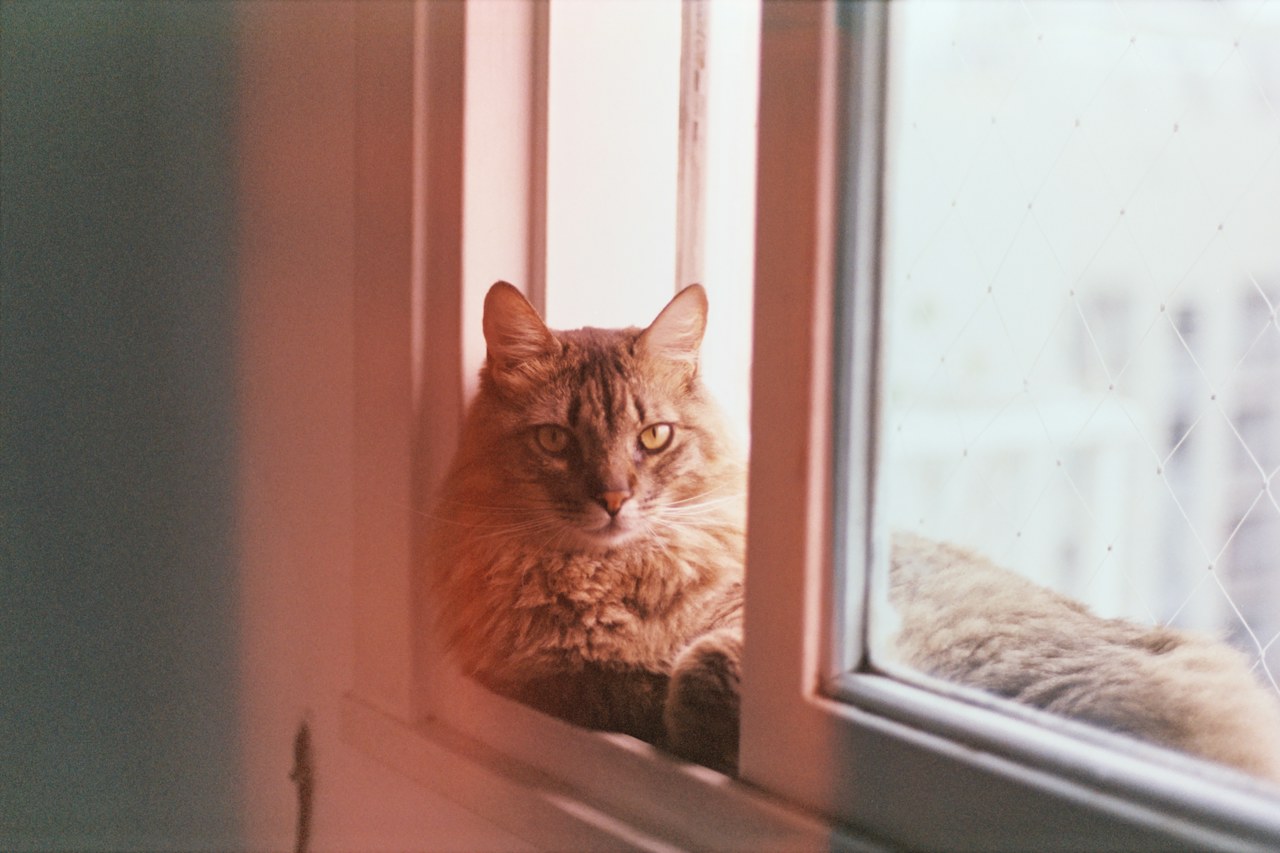
A cat watching from a shelf or doorway does not need to be encouraged into the centre of the room. Guests can enjoy noticing the cat without creating an interaction. Keep voices and movement reasonably calm, and avoid passing the cat between people for photographs. If the cat approaches, let the encounter remain brief and voluntary. An animal walking away has provided useful information about what they want next.
Watch the whole pattern rather than one isolated movement. Repeated hiding, tense watching, attempts to escape, or difficulty settling may mean the setting needs to change. Reduce activity near the cat, offer more distance, or end the interaction. Do not punish hissing or other warnings; make the situation easier and seek professional advice for persistent concerns. A warning can help prevent escalation when people respond by giving space.
Adapt the plan to longer stays
Overnight visitors introduce suitcases, unfamiliar routines, and rooms used differently from usual. Explain evening and morning door rules, and show where the cat's equipment belongs. Ask guests to check before closing a room that the cat uses. Keep feeding and cleaning responsibilities assigned to a specific adult so everyone does not assume someone else has already taken care of them. A simple routine prevents both missed care and duplicate meals.
Give the cat quiet time when the household is less active. If a visitor is staying for several days, there is no need to force familiarity on the first evening. Some cats gradually become curious; others prefer distance throughout the stay. Respect either response while ensuring daily needs are met. If the arrangement repeatedly disrupts eating, toileting, or normal behaviour, contact your veterinarian for advice rather than waiting indefinitely for adjustment.
Brief one guest before the group arrives
If several visitors are coming together, explain the cat's arrangements to one adult in advance and ask them to help others follow the plan. Show where coats go, which door remains closed, and how children will be supervised. That reduces the number of instructions you need to repeat while greeting people. The guest does not become responsible for the cat's welfare; you remain the host managing the environment. Their understanding simply makes it easier for the group to respect an ordinary household routine.
Consider a visit with a meal at the centre of it. Chairs move, serving dishes appear, and people repeatedly walk to the kitchen. A retreat that worked during drinks may become busy during dinner. Plan for that transition before it happens. Keep the cat's access clear and make sure food and bags are stored appropriately. Afterward, ask yourself which part of the evening created the most disturbance. One adjustment to that moment may be more useful than redesigning the whole home before every visit.
Restore the room thoughtfully afterward
When guests leave, check doors, windows, food scraps, and dropped objects before allowing unrestricted access. Return resources and furniture gradually to their usual positions. Let the cat investigate without being carried from place to place. Note which parts of the visit worked: a quieter entrance, a private room, or a guest who simply waited. Those observations give you a practical starting point next time, while keeping your cat's comfort at the centre of ordinary hospitality.
Have a correction or a question? Write to the Amenkingdj team.