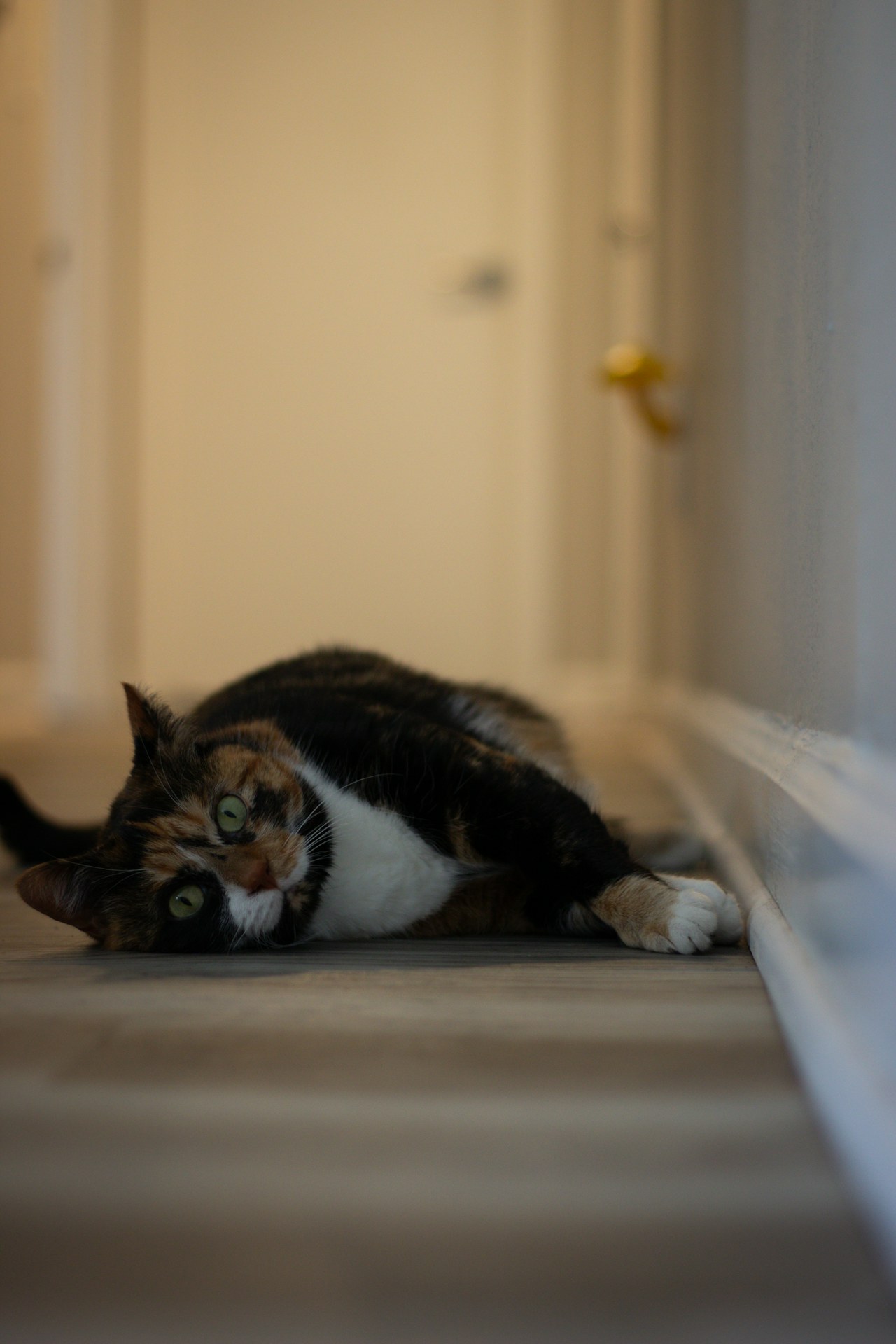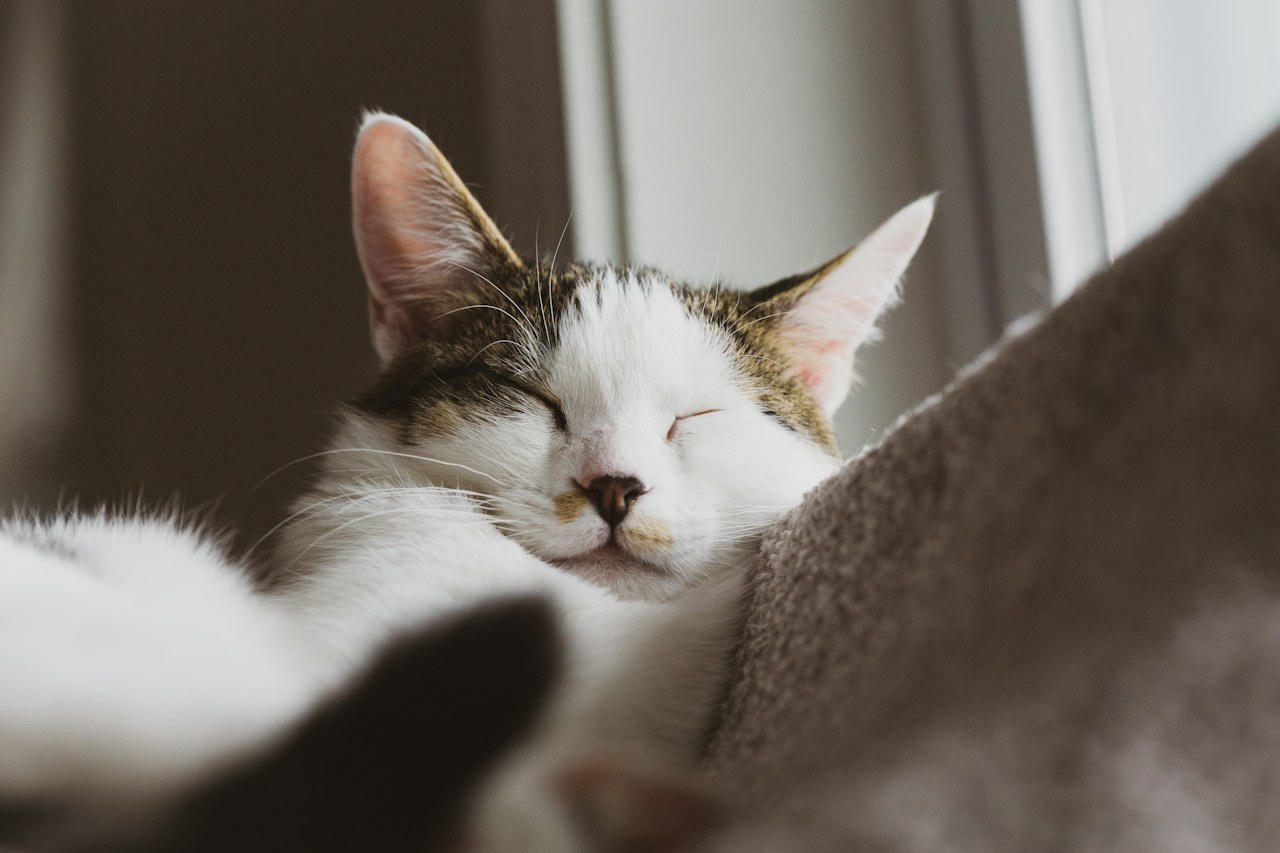
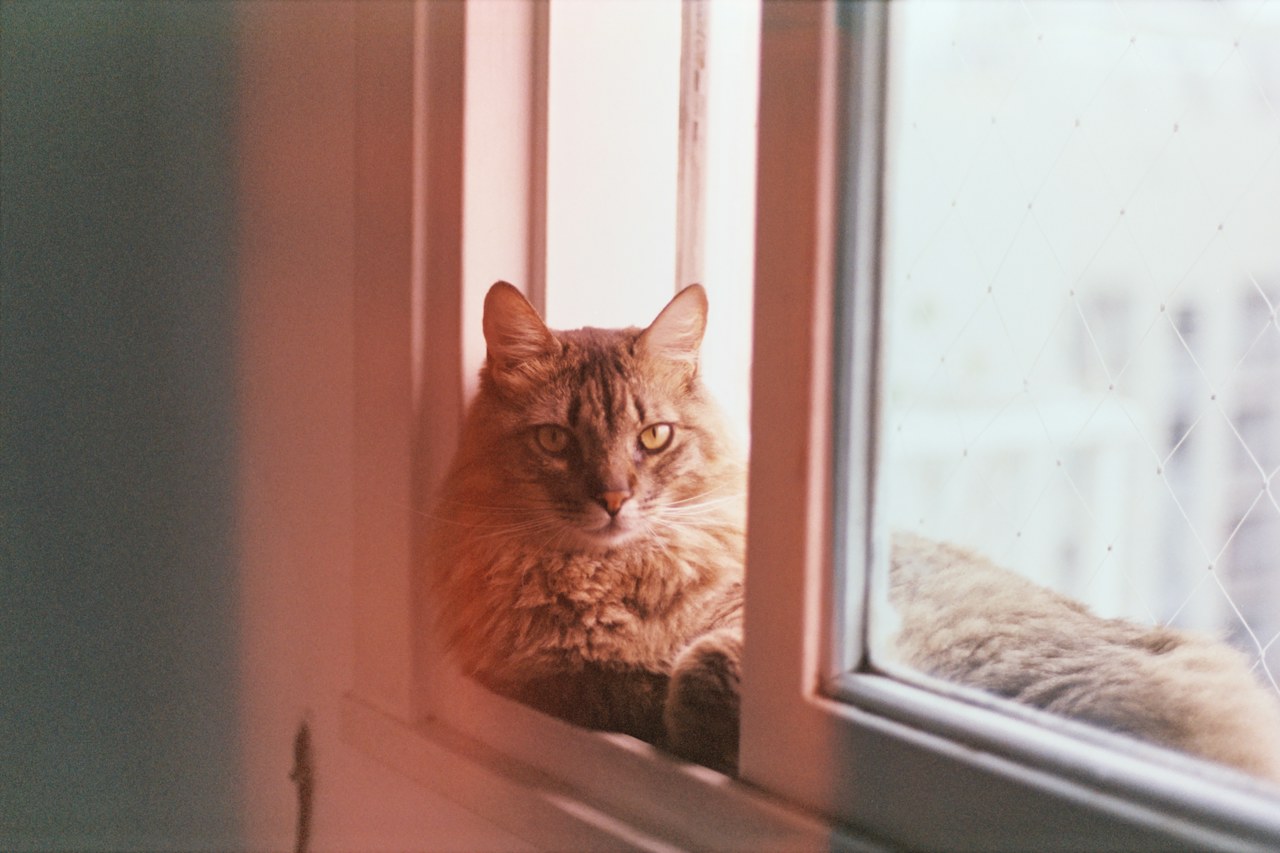
An indoor cat can spend a surprising amount of time watching a familiar window. Passing birds, leaves, and changing light offer plenty to notice without leaving home. A good viewing spot gives the cat a comfortable choice within the room. It does not need to resemble an elaborate climbing installation, and an ordinary stable piece of furniture may work better than a complicated product squeezed into the wrong place.
The window itself deserves as much attention as the perch. A comfortable cushion cannot compensate for an insecure opening, a loose blind cord, or a route that requires the cat to jump across a cluttered shelf. Start with the whole journey from the floor to the view. Then consider how the space changes when the sun moves, visitors arrive, or another animal appears outside.
Check the opening before arranging the seat
Make window security the first task. Do not assume that an insect screen, a tilted opening, or a partially closed window will safely contain a cat. Check the suitability of any guard with its manufacturer and the person responsible for the property. Keep the cat elsewhere while windows are being cleaned or adjusted. If a safe arrangement is not available, choose a closed window and provide ventilation by another suitable method.
Look for blind cords, curtain loops, and objects that can fall when brushed by a tail. Secure or remove hazards rather than trusting the cat to avoid them. Check whether furniture could press against a screen or handle. In a rented home, ask before installing hardware and follow the relevant fixing instructions. A viewing place should remain safe when you are busy elsewhere, not only while you are standing beside it.
Build an easy route upward
Watch how your cat reaches existing favourite places. A confident young cat and an older cat may use the same room very differently. Provide stable intermediate surfaces if useful, with enough room to pause and turn. Avoid creating a route that depends on balancing along the back of a lightweight chair. If your cat's jumping or movement changes, seek veterinary advice rather than assuming that a new step alone solves the issue.
Keep access clear when the room is in normal use. A stool that becomes covered with laundry each evening is not a dependable step. Check that doors cannot swing into the route and that another animal cannot easily block the only way down. In a household with several cats, more than one resting and viewing option may reduce competition. The arrangement should offer choice rather than force everyone toward a single narrow platform.
Match the surface to the way your cat rests
Some cats sit upright for a short watch; others stretch out and doze nearby. Choose enough usable space for your cat to turn and lie comfortably without slipping over the edge. Check the stability of furniture when weight shifts to one side. Follow load limits and fitting instructions for purpose made perches, and inspect them regularly. A fixing that seemed secure on the first day may loosen with repeated use.
Use a washable layer that stays in place without dangling ties. Thick fabric is not always better, particularly beside a sunny pane. If the cat prefers the bare surface, that preference may be useful information. Offer comfort without continually changing everything in pursuit of an ideal setup. Keep nearby shelves clear of breakable ornaments so the perch does not become a place where every ordinary movement creates a problem.
Follow the sun through the room
Check the window at several times of day. A cool morning position can become hot in direct afternoon sunlight. Your cat needs an easy route away and another comfortable resting option. Do not shut the cat in a room simply because it contains a nice view. Use appropriate shading if needed, making sure cords and fabrics remain secure. Fresh water should be readily accessible elsewhere in the home.
Seasonal changes can alter the experience. A window may become draughty, condensation may wet a cushion, or a radiator below the sill may make the surface warmer than expected. Keep bedding away from heaters and follow appliance safety instructions. Watch what the cat chooses across different conditions. A perch that is used only in the morning can still be successful; it does not need to become the cat's permanent address.
Decide whether the view is enjoyable
A view is not automatically relaxing. A visiting outdoor cat, repeated movement very close to the glass, or loud traffic may leave some cats unsettled. Notice whether your cat can leave, groom, rest, and return to normal activities after watching. Persistent pacing, intense vocalising, or agitation around a particular window deserve attention. Avoid treating a distressed reaction as entertainment or encouraging it for a photograph.
If something outside repeatedly causes difficulty, try blocking part of the view or offering a quieter window. You might use a suitable opaque lower panel while preserving light above, provided the material is safely fitted. Keep changes modest and observe their effect. If tension between household cats develops around the window, seek advice from a qualified feline behaviour professional and your veterinarian where appropriate. Adding another cushion may not address the actual trigger.
Make cleaning and inspection straightforward
Choose an arrangement you can lift, wipe, and inspect without dismantling the room. Check fabric for loose threads, fittings for movement, and the surface for moisture. Remove the cat before using cleaning products and follow their instructions, including ventilation and drying. Avoid spraying products around the animal or leaving wet chemicals within reach. A washable spare cover lets you clean one layer while keeping a familiar option available.
During cleaning, look at the access route again. Furniture often drifts over time as people move tables and chairs. A gap that was easy to cross may gradually widen. Ask other household members to keep the route clear and avoid stacking objects on the perch. Routine checks are easier when the setup is simple. You should not need a toolbox every time you want to remove a handful of fur.
Check the view at floor level
Sit where the cat begins the route and look upward before making the arrangement permanent. A lamp cable may cross the landing space, a curtain may conceal the edge, or the gap between a chair and a shelf may look smaller from above than it feels from below. Then check from the perch toward the floor. The route down matters just as much as the climb. Keep both directions available when people rearrange the room for cleaning or guests.
Try leaving a small clear zone around the final landing place. A basket that is harmless beside the wall can become an obstacle if it shifts beneath the cat's usual descent. Tell household members why that patch stays empty. This explanation is easier to remember than a general request not to move anything. It also lets everyone maintain the useful part of the setup without treating the entire room as a display that cannot be changed.
Give the cat the final decision
Once the space is ready, let your cat investigate at their own pace. You can place a familiar blanket nearby, but avoid repeatedly lifting the cat onto the perch or preventing them from leaving. Some cats approach a changed room cautiously. Others inspect the new feature once and return later when the house is quiet. Keep the location predictable while you see how it fits into the day.
After a week, review safety, comfort, and actual use rather than judging the arrangement by its appearance. If the perch remains empty, consider whether the route, temperature, or view explains why. You may find that the useful improvement was a clear shelf near another window. The best viewing spot is the one your cat can reach safely, enjoy voluntarily, and leave whenever another part of home feels more appealing.
Have a correction or a question? Write to the Amenkingdj team.