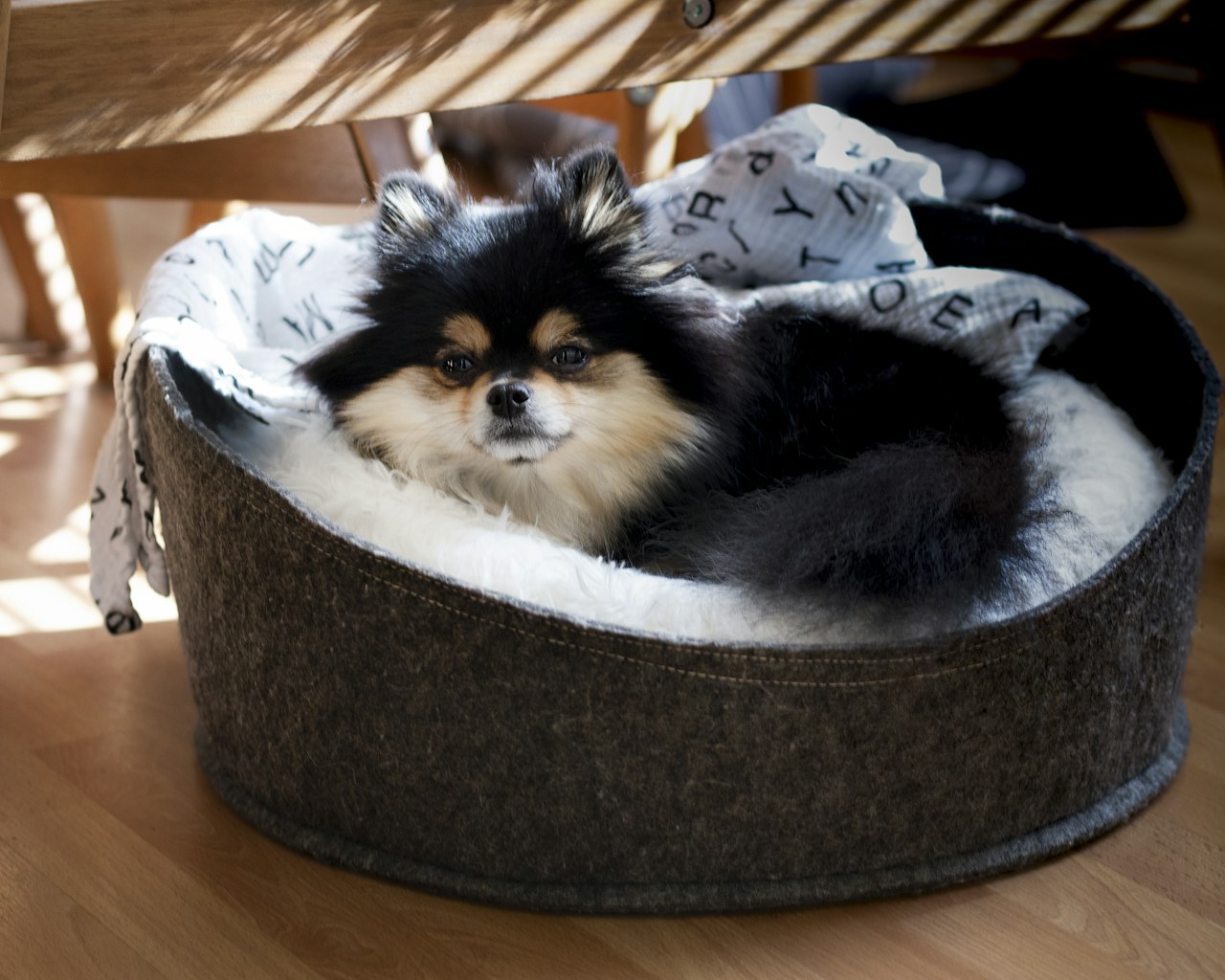
A portable mat can give a dog a familiar place to settle while you read, prepare a meal, or sit in the garden. The useful skill is not holding the dog motionless. It is helping the dog recognise a comfortable option and choose it when the surrounding situation is manageable. Start with an ordinary quiet moment, long before you need the mat during an exciting visit or a busy dinner.
This exercise should remain gentle and voluntary. Use rewards your dog can safely receive within their feeding plan, and keep sessions brief. A dog who is uncomfortable, frightened, or unable to rest may need changes in the environment and qualified help rather than more repetitions. The mat is a training tool, not a substitute for meeting exercise, toileting, social, and resting needs throughout the day.
Choose a mat that stays put
Use a washable surface large enough for the dog to lie comfortably. Check that it does not slide across the floor as the dog steps on. Remove loose threads, dangling ties, and pieces that could be chewed or swallowed. Put it in a quiet area away from doorways and food preparation hazards. Keep the first location simple so your dog does not have to navigate visitors, other animals, or a busy family to reach it.
Prepare a small amount of suitable reward before inviting the dog nearby. Keep the rest out of reach and make sure you can handle it without repeatedly bending over the dog's head. If food is not appropriate for your dog, discuss alternatives with a qualified reward based trainer. Avoid beginning when the dog is already distressed or intensely focused on something outside. Choose a moment when both of you can work without rushing.
Reward noticing the mat
Place the mat down and allow the dog to investigate. Quietly reward a glance toward it, a step closer, or a paw touching it, depending on what your dog offers. Deliver the reward in a way that encourages comfortable exploration rather than pulling the dog into position. You are marking small useful choices. There is no need to push the dog down, hold them there, or repeatedly issue a command they have not learned.
If the dog ignores the mat, reduce the difficulty. Move to a quieter room or try a different stable surface. You can reward being near it before expecting contact. Some dogs immediately stand on a new object; others need time to investigate. Keep the mat available as a neutral object between sessions if safe. Progress should reflect the dog's response, not a timetable copied from someone else's demonstration.
Build a comfortable position gradually
Once stepping onto the mat is familiar, reward staying briefly and any relaxed position the dog offers. A familiar sit or lie down cue may help some dogs, but avoid turning the exercise into repeated rapid position changes. The eventual goal is an easy resting option. Deliver rewards calmly and allow the dog to move away. Leaving gives you information about how manageable the exercise feels and creates a chance to invite another voluntary approach.
Do not wait for a long stay before offering the first reward. At the beginning, a moment of stillness may be enough. Add duration in small increments while keeping the overall session short. If the dog gets up, simply reset at an easier level. Repeatedly placing them back or blocking the edge of the mat can make the exercise less comfortable and distract from the behaviour you are trying to encourage.
Add a release before adding difficulty
Use a simple consistent word to indicate that the dog is free to leave. Practise it after a very brief successful pause, then let the dog move. This creates a clear end to the exercise and helps you avoid waiting until the dog becomes restless. Keep the cue distinct from ordinary conversation if possible. Everyone involved should use the same basic pattern rather than inventing several competing instructions.
As the dog understands the routine, practise a short pause followed by release in the familiar room. Do not add distance, a longer wait, and a moving person at the same time. A useful next step might be standing up while the dog remains comfortable for a moment. If that is difficult, sit again and make the change smaller. Successful practice should look almost uneventful, which is exactly what makes it repeatable.
Introduce ordinary movement one piece at a time
Try lifting a book, taking one step, or briefly turning toward a table. Reward the dog for remaining comfortable, then release. These small actions are preparation for normal life. They are not tests designed to catch the dog making a mistake. If your dog follows you, make the movement easier and shorten the interval. Avoid scolding or using the mat as a place of punishment when household activity becomes inconvenient.
Practise in another quiet location only after the first setting is familiar. Moving the mat changes the picture for the dog, so return to easy steps. A kitchen full of food or a room with visitors is much harder than an empty sitting room. Keep the mat well away from hot appliances, dropped food, and doors that may open. Training success never makes an unsafe location appropriate.
Keep the mat separate from forced isolation
Your dog should have comfortable resting places available outside formal practice. Do not rely on a mat cue to keep a dog near activity they find upsetting. If visitors, children, or other animals are making the situation difficult, arrange distance and appropriate separation. Explain to the household that a dog on the mat is still allowed personal space. The mat does not make touching, hugging, or taking objects from the dog automatically acceptable.
If you need a dog to remain safely separated while cooking or answering the door, use suitable management rather than expecting a developing skill to guarantee safety. Set up the environment before the busy moment arrives. A trainer can help adapt the exercise to your home and identify when another approach is needed. It is reasonable for training and physical management to work together.
Separate practice from the meal you need to cook
Imagine you want the dog to rest nearby while you prepare dinner. Begin on a different occasion, with the kitchen inactive and the mat in a safe position away from appliances. Practise one easy movement, such as picking up an empty utensil, then reward and release. On another session, add a small familiar household action. Do not begin the first lesson while pans are hot and you must concentrate on several tasks. That setting gives neither participant much room to learn.
When an actual meal needs attention, use the management arrangement that already keeps the dog safe. Return to mat practice when you can observe and respond. This prevents the cue from being repeated in increasingly urgent tones because dinner is burning and the dog has moved. It also gives you a clear measure of readiness: the skill should first be easy during a quiet rehearsal of the relevant movement. Real household use can then grow gradually from those manageable pieces.
Measure progress by useful moments
Notice whether your dog chooses the mat more readily and can remain comfortable during small familiar activities. That may be more useful than timing a long stationary stay. Keep a brief note of the setting and the hardest step that remained easy. End practice while the dog is still engaged, put rewards away, and let ordinary life resume. Over time, a familiar mat can become one more comfortable choice in the room, built through patient repetition rather than pressure.
Have a correction or a question? Write to the Amenkingdj team.