
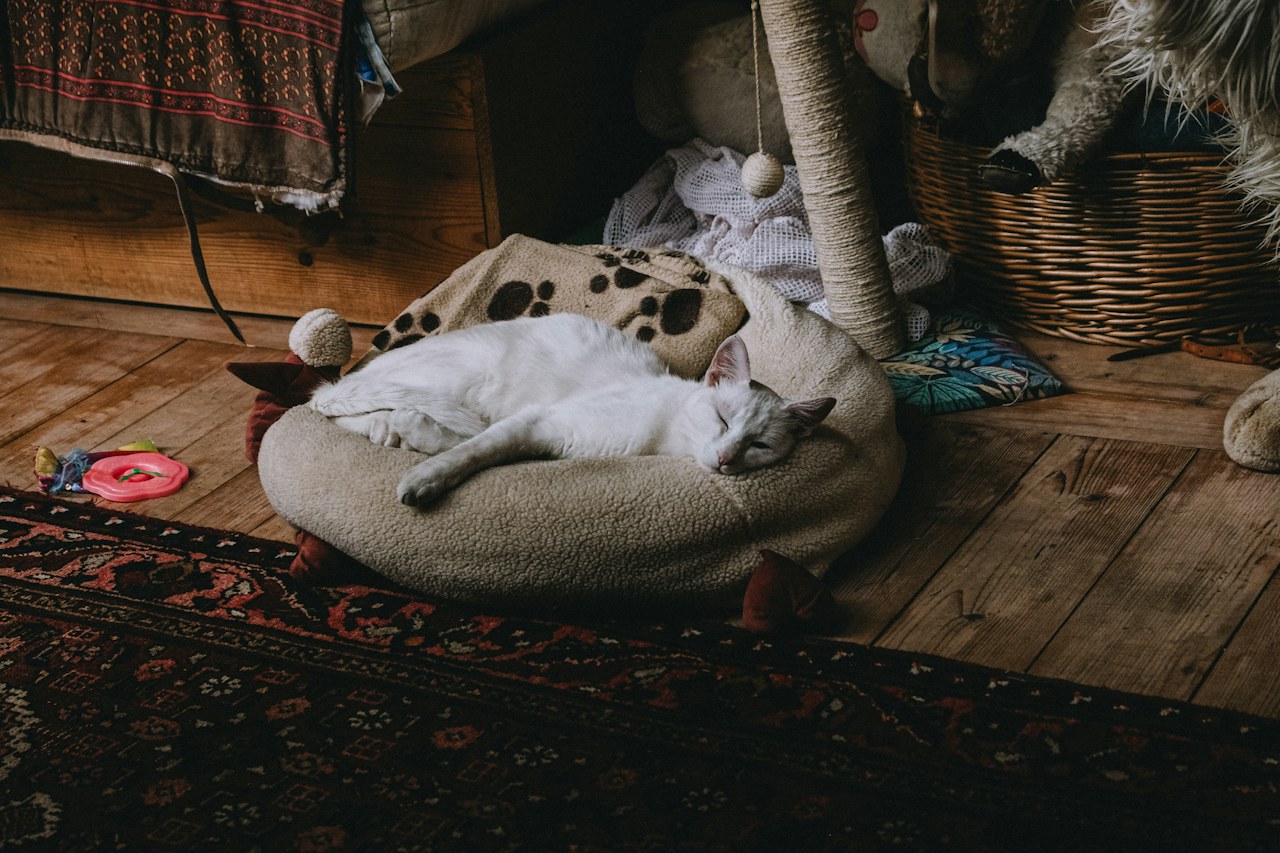
A pet bed is often sold as a small piece of furniture, with colours and textures designed to fit a room. The animal using it has a different set of priorities. They need to approach comfortably, turn, rest in their preferred position, and leave without difficulty. The people maintaining it need to wash, dry, inspect, and move it. A useful buying decision considers both sides before choosing the fabric.
Begin by asking whether a new bed is actually needed. A change in placement, a washable cover, or a second resting option may solve the problem with the current arrangement. If your pet suddenly avoids a familiar bed or seems uncomfortable getting in and out, seek veterinary advice where appropriate. Shopping can improve a practical setup, but it should not stand in for investigating a meaningful change in movement or behaviour.
Watch how the pet rests across the day
Notice whether your animal curls tightly, stretches out, leans against a side, or chooses a flat surface. Look at several ordinary moments rather than one photograph. A cat may use an enclosed space when the room is busy and a sunny open surface later. A dog may stretch onto a cool floor after activity. These preferences suggest useful options, but they do not mean a single product must satisfy every resting need.
Measure the pet in the positions they use and compare those measurements with the usable sleeping area, not only the product's outer dimensions. Raised sides can reduce the space inside. Check whether the animal can turn comfortably and whether the entrance is accessible. If physical needs are uncertain, ask the veterinary team what features are appropriate. Marketing terms cannot tell you whether a particular shape suits your individual animal.
Measure the route as well as the floor space
A bed that fits between two pieces of furniture may still be awkward to enter. Look at the approach from the pet's usual direction. Keep access away from doors that swing across the bed and places where people step over resting animals. In a busy room, a slightly different position may provide more comfort than a larger cushion. The bed should not block human escape routes or create a trip hazard in the dark.
Consider whether another animal can block the only exit. Several pets may need separate resting options rather than a single shared bed placed in a narrow corner. Do not assume they will comfortably take turns. Provide choices where practical and observe how resources are used. A product cannot compensate for a layout that repeatedly puts animals into close contact when they would prefer space.
Read the cleaning instructions before the reviews
Check whether the cover is removable, what can be washed, and how the filling should be handled. Confirm that the pieces fit your washing machine and can dry properly in your home. A very large cushion may be inconvenient in an apartment with limited drying space. Look at fasteners and seams, and consider whether you can remove the cover without wrestling with a tight opening every time.
Think about the period while the bed is being cleaned. A spare washable layer or another resting place can keep the routine practical. Avoid using strong fragrances to conceal dirt or odour. Clean according to instructions and inspect for damage before returning the bed to use. A useful maintenance plan is part of the purchase, just as much as choosing the right size.
Check stability and construction
Look for a base that remains steady on the intended floor. Lightweight beds can move when a dog steps in, while certain surfaces may slide under a cat's jump. Examine loose trims, exposed filling, dangling ties, and detachable decorations. If your pet chews bedding, discuss suitable management and product choices with an appropriate professional. No fabric should be assumed indestructible, and damaged material needs prompt attention.
For raised beds or furniture style products, check load limits, assembly instructions, and the stability of all parts. Inspect fittings over time rather than only at assembly. Consider the height of access and the surrounding landing space. Do not add an improvised step that tips or slides. A simple low bed can be more practical than an elaborate structure that requires the animal to negotiate an awkward route.
Consider temperature and the room's daily changes
The warmest looking bed may be uncomfortable beside a sunny window or a heater. Check the position at different times and seasons. Your pet needs to move away freely and have another suitable resting option when conditions change. Keep bedding away from heating equipment and follow all relevant safety instructions. Do not cover ventilation points or drape fabric over appliances to create a cosy corner.
Notice draughts, condensation, and moisture from nearby doors. A washable cover does not solve a location that repeatedly becomes damp. If the room is noisy during certain hours, the animal may prefer another space regardless of the bed's softness. Choose a position that fits actual household activity. The quiet place at midday may become the busiest route in the home when everyone returns in the evening.
Compare the purchase as a practical commitment
When narrowing options, write down usable size, access height, cleaning method, replacement cover availability, and any fitting or assembly needs. Keep price alongside those details without assuming that a higher figure guarantees comfort. Check return terms before buying, particularly if dimensions are unclear. Avoid purchasing several novelty features that are difficult to inspect or maintain. A straightforward bed that meets the actual need may be the better long term choice.
If you are replacing a familiar bed, retain a safe familiar layer where appropriate and let the animal investigate the new item voluntarily. Do not repeatedly place them inside or prevent them from leaving. Some pets need time to approach a changed space. Keep the rest of the routine predictable while you assess the result. Initial curiosity or hesitation does not alone tell you whether the product will be useful.
Compare two options on paper
Suppose one bed has attractive raised sides and another offers a flatter washable surface. Draw their usable sleeping areas on paper using the dimensions provided, and compare them with the space your pet normally occupies. Check the entrance height, the route around the bed, and how the cover comes off. The larger outer measurement may not provide the larger resting area. If the dimensions are unclear, ask the seller rather than assuming a size label means the same thing across products.
Now picture washing each option on an ordinary wet week. Where will it dry, and where will the animal rest meanwhile? Consider the cupboard space required for a spare cover and whether you can lift the filling comfortably. These details can change which purchase is practical without saying anything negative about the alternative product. Choose the option that fits your pet and household together. A bed is used daily, so maintenance and access deserve as much attention as the first impression of colour or texture.
Check where the bed will go during floor cleaning. If moving it requires lifting a heavy frame through a narrow doorway, routine maintenance may become inconvenient. A lighter removable sleeping layer can help in some homes, provided it remains stable during use. Measure storage space before buying spare covers or bulky inserts. Planning for these ordinary tasks keeps the purchase useful through muddy weather, washing days, and small changes in how the room is arranged.
Review use rather than appearance
After the first week, check whether the pet can use the bed comfortably and whether cleaning is manageable. Look for slipping, awkward entry, or household traffic that still interrupts rest. Adjust placement before assuming the purchase failed. A successful bed becomes a dependable option within the home, alongside other safe choices. Its value lies in comfortable voluntary use and sustainable care, not in how closely the room resembles the product photograph.
Have a correction or a question? Write to the Amenkingdj team.