A dog bed can be beautifully made and still end up unused. Sometimes the problem is the position: a draught beneath a door, feet passing close to the dog's face, or the washing machine starting just as the dog settles. Before buying another bed, look at the places your dog already chooses. A familiar patch of floor can tell you more about comfort than a product description promising an ideal sleep experience.
Creating a resting corner is a small household design job. You are arranging access, noise, temperature, cleaning, and human behaviour around an animal who cannot move the furniture. The aim is to offer a dependable option, not to insist that the dog spends every quiet moment there. Many dogs use different resting places across the day as sunlight, family activity, and room temperature change.
Map the room before moving furniture
Watch the room at its busiest and quietest times. The spot beside the sofa may be peaceful in the afternoon but become the route to the kitchen during dinner. A space under a window may be warm at breakfast and uncomfortable later. Note door swings, heater positions, trailing cables, and the distance from speakers or televisions. Keep the resting area clear of escape routes and places where someone could trip in the dark.
Choose a position where the dog can observe household activity without lying directly in it. Being near the family and being available for constant touching are different things. If possible, provide a second quiet option elsewhere so the dog can leave when visitors arrive. In a small home, even shifting a bed away from the main walkway can make a useful difference without creating a separate room.
Let the dog show you the useful size
Watch how your dog rests naturally. Some curl tightly, while others stretch onto their sides or change position several times. Choose enough space for the positions your dog actually uses. Measure the available floor area as well as the dog; a bed that fits on paper may block a cupboard or force the dog into a narrow corner. Check whether the dog can approach and leave without squeezing past furniture.
Bedding should offer stable footing and comfortable support suited to the individual animal. If getting up, stepping over a raised edge, or settling appears difficult, consult your veterinarian rather than trying to solve a possible health issue solely through shopping. For an older dog, a low accessible resting surface may be worth discussing. No label on a bed can replace observing movement and seeking advice when that movement changes.
Think about washing before choosing fabric
Removable covers are useful only if you can remove them easily and wash them as directed. Check fasteners, drying instructions, and whether the filling also needs cleaning. A large wet cushion may be awkward in a small washing machine. Keep a spare washable layer so the dog retains a familiar place while the main cover dries. Avoid strong fragrances intended to disguise odours; identify and clean the source instead.
Inspect bedding regularly for torn seams, exposed filling, or loose pieces that could be chewed. A dog who destroys bedding may need a different management approach and professional guidance, especially if they swallow material. Do not assume a more expensive fabric solves the underlying problem. Choose practical materials you can maintain, and remove damaged items promptly. Comfort includes keeping the resting area usable throughout the week, not just on washing day.
Introduce the corner without making it a command centre
Place the bed and let your dog investigate. You can quietly reward voluntary interest or settling if that is helpful, without repeatedly calling the dog over and asking for a performance. Keep early experiences low key. A resting place should not become somewhere the dog is constantly sent whenever the household is frustrated. It also should not be used to prevent the dog from moving away from uncomfortable contact.
If the dog chooses another safe spot, consider why. The new bed might be too warm, positioned beside an unfamiliar object, or simply less appealing than the existing floor. Change one feature at a time and observe. Some dogs prefer a mat, a flatter cushion, or a cooler surface at certain times. Providing an alternative does not mean you have to turn every preference into a new purchase.
Make the household rules easy to follow
Agree that a resting dog is allowed to remain undisturbed. Adults should model the rule consistently, especially when children or visitors are present. Supervise interactions and use suitable physical separation when you cannot supervise actively. Explain that approaching the bed to hug the dog, take a toy, or pose for a photograph can interrupt the very rest the corner is intended to provide. Call the dog away gently when interaction is needed.
Give visitors another place to leave bags and coats so belongings do not accumulate around the bed. Avoid stepping across the dog to reach a socket or shelf. If the corner has become a convenient dumping ground, the layout needs attention. Small practical rules work better than a complicated list no one remembers: keep the route clear, leave resting dogs alone, and let them choose whether to approach.
Notice noise and temperature as they change
Sudden household sounds can make an otherwise appealing corner difficult. Check whether a dishwasher, doorbell speaker, or vibrating appliance shares the same wall. You may be able to shift the bed slightly or change when a noisy task happens. Do not use extra blankets to compensate for a location that becomes too hot. Keep bedding away from heaters and follow the safety instructions for any equipment in the room.
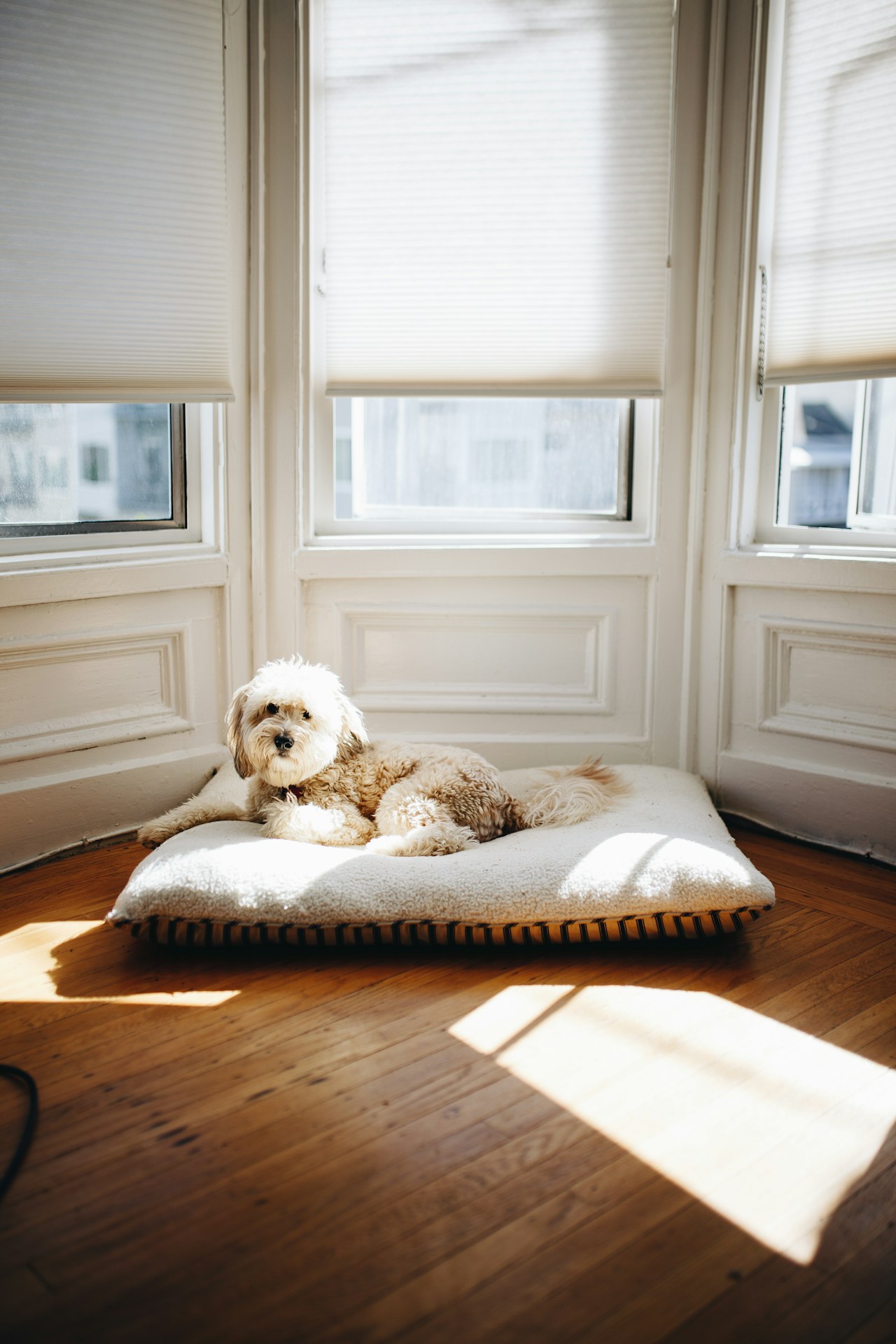
During seasonal changes, reassess the position. Sunlight can move across a room differently, and a familiar draught may appear when windows are opened elsewhere. Your dog may choose a cooler floor rather than the bed. Offer choices where feasible, and investigate abrupt or persistent changes in resting behaviour rather than labelling them fussiness. Discomfort, household disruption, or a health concern may require different responses.
Try the position before replacing the bed
Suppose your dog usually lies beside the dining table while the new cushion stays empty near the hallway. Instead of assuming the cushion is wrong, place a familiar safe resting layer in the preferred area when the room is quiet. Check that chairs can still move without approaching the dog and that people can pass comfortably. Observe several ordinary evenings. If the dog uses the new position, you have learned something about location. If they still prefer the floor, temperature, texture, or another feature may deserve attention before a purchase.
Make the experiment reversible. Do not move several pieces of furniture, introduce a different fabric, and change the household's evening routine all at once. Ask everyone to respect the temporary resting area just as they would the permanent one. A few simple observations can prevent a cycle of buying beds that all occupy the same unsuitable corner. They can also show that your dog benefits from two different options, one near the family and one farther from evening activity.
Review the corner after an ordinary week
After several days, ask practical questions. Is the bed easy to clean? Can your dog leave freely? Does anyone keep walking too close? Is the resting area quiet when the household is busiest? Keep what works and make one small adjustment where needed. A good corner becomes part of the home's normal rhythm: available, comfortable, and respected. Its success is measured by the dog's ability to use it, not by whether the arrangement looks finished in a photograph.
Have a correction or a question? Write to the Amenkingdj team.